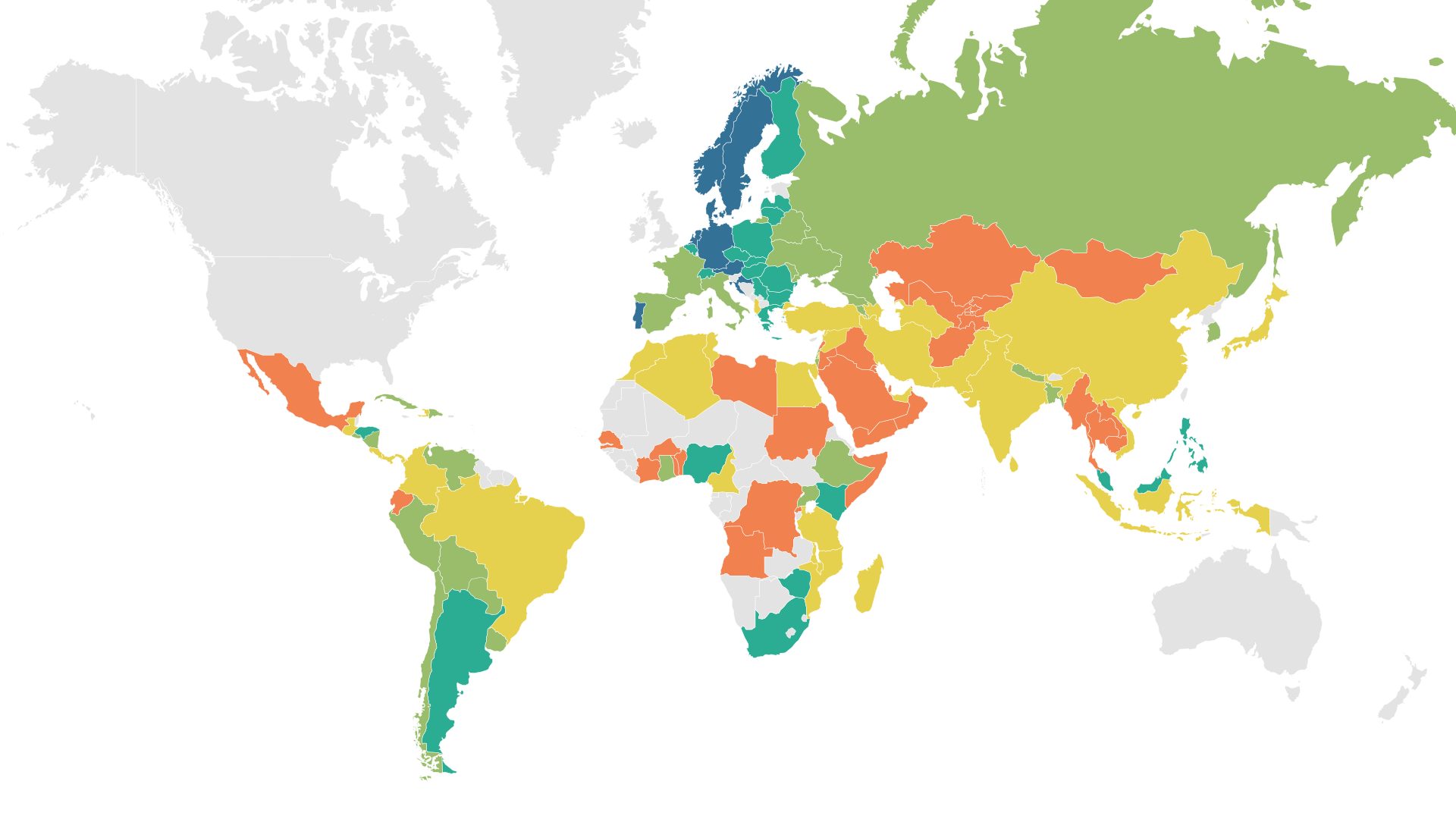
EF English Proficiency Index (EPI) 2026

The hidden disadvantage of highly proficient English speakers

The latest research from EF, assessing the English skills of 2.3 million test-takers worldwide, exposes a skill gap that may be hindering even highly proficient speakers: the skills needed for real-time or spontaneous communication – speaking and listening – rank far below reading and writing skills. What can employers do about it?

Highlights


A significant skill gap between written and spoken English has been exposed in the past two years, with speaking and listening skills trailing behind – even in overall High Proficiency cohorts.


High Proficiency in English correlates with innovation, productivity, and talent competitiveness on the global stage.


Entry-level workers are experiencing a decades-long decline and stagnation in English skills, a trend which appears to improve once they reach the workplace.


Operations and customer-facing functions are making strides in English proficiency, leaving low-proficiency support functions behind.

The casualty of the skills gap: Real-time communication

The 2026 EF English Proficiency Index (EPI) – which for the past two years has included AI-powered assessment for all four language skills, including speaking – continues to reveal a significant gap between written skills (reading and writing) and real-time skills (speaking and listening).

The overall picture implies that spontaneous communication – meetings, negotiations, relationships, and much more – may be a quiet struggle for employees whose understanding of English is otherwise solid, but who have had less opportunity to practice in live interactions.


What is the EF EPI?


The average speaking score globally – 464 – trails the average reading score by 57 points, and that gap is slightly wider for listening.

The need for 4-skill testing

The EF EPI defines English proficiency in multiple bands from ‘Very Low’ to ‘Very High’ on a scale from 0-800 points. Within that score, reading, writing, listening, and speaking are scored individually.

A limited speaking ability presents a clear challenge for cohorts in lower proficiency bands. However, this gap in ‘real-time’ communication is not confined to countries with overall low proficiency.

In fact, some of the strongest-performing regions continue to demonstrate very strong Receptive skills (reading and listening), alongside substantially weaker Productive skills (speaking and writing).

This gives HR leaders a warning about how we measure talent; traditional assessments that focus on multiple-choice comprehension exercises can give the impression of English proficiency while missing the skills that determine whether someone can actually find their voice.

From a talent development perspective, this could change learning strategy and design. While English training remains the solution to strengthening an organization’s working language, a stronger focus on improving speaking and writing skills may be key to shaping an employee’s potential.

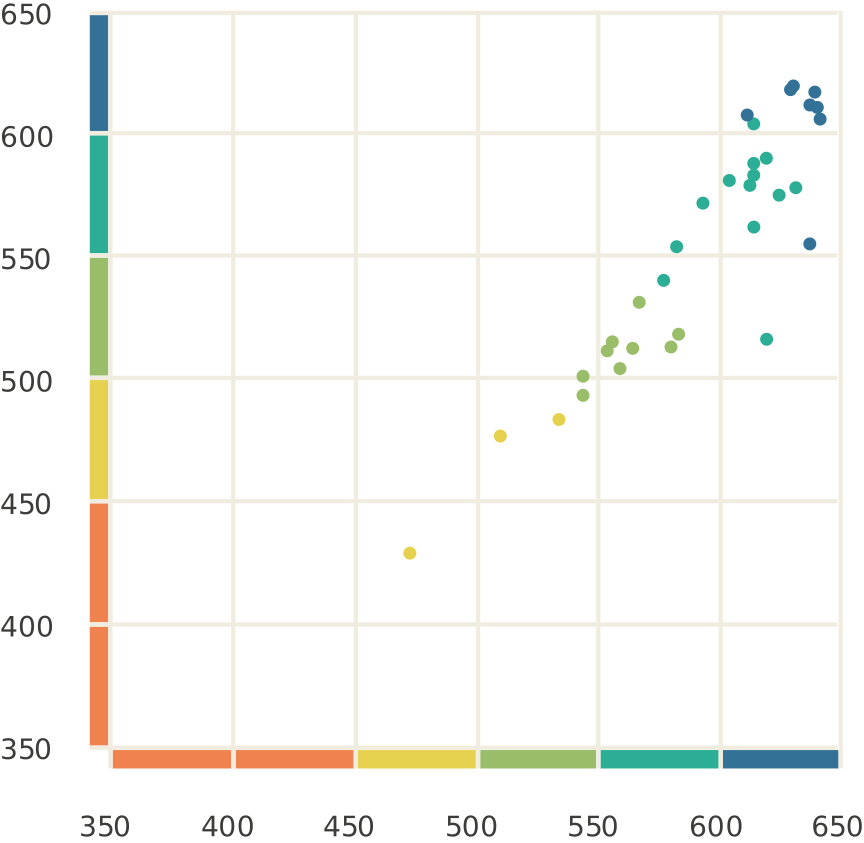
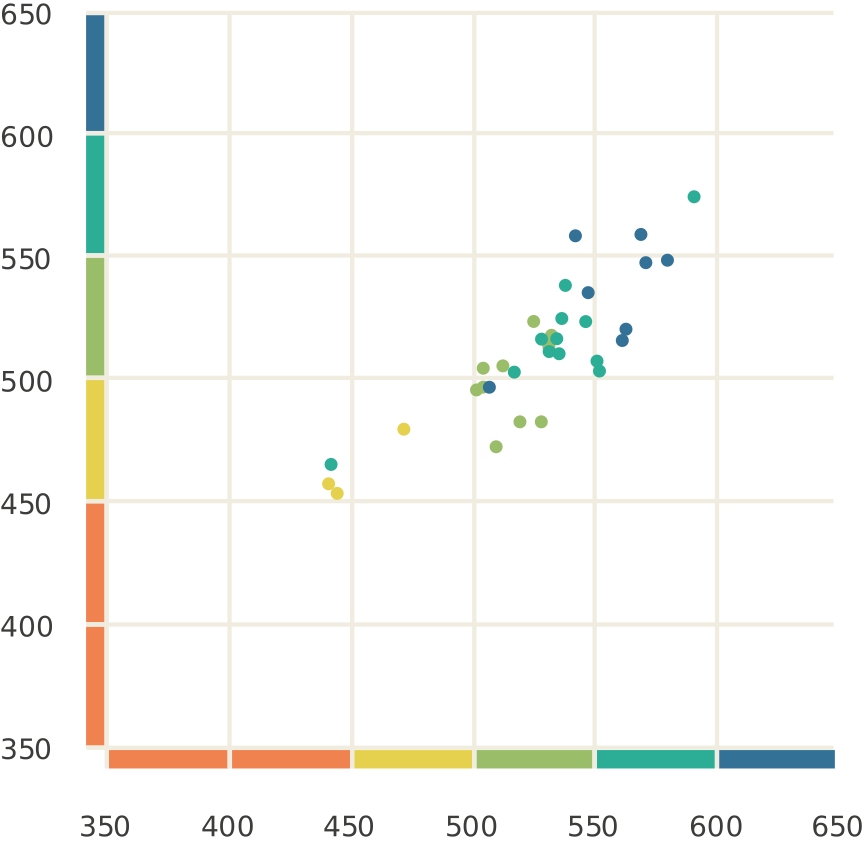
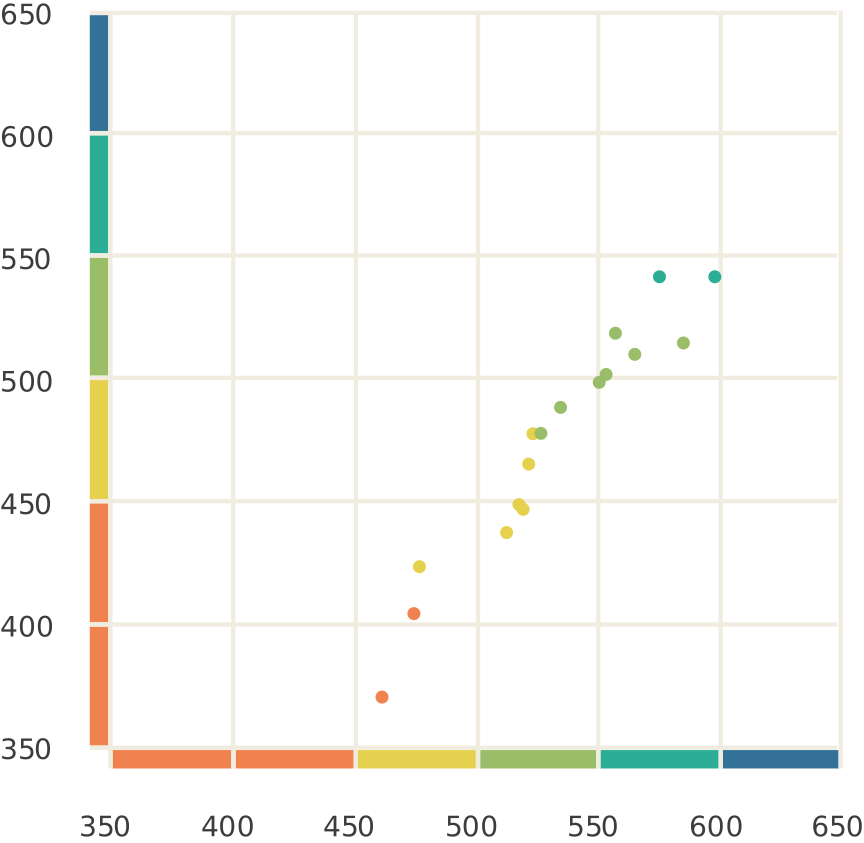
Comparing Receptive and Productive skills between a High proficiency region (Europe) and a Low/medium proficiency region (Latin America)

Receptive skills (Europe)

Productive scores are typically lower than receptive scores across High and Very high proficiency countries.

Listening scores

Reading scores

Productive skills (Europe)

Productive scores are typically lower than receptive scores across High and Very high proficiency countries.

Speaking scores

Writing scores

Receptive skills (Latin America)

Productive and receptive skills are more evenly matched for Low and Medium proficiency countries.

Listening scores

Reading scores

Productive skills (Latin America)

Productive and receptive skills are more evenly matched for Low and Medium proficiency countries.

Speaking scores

Writing scores

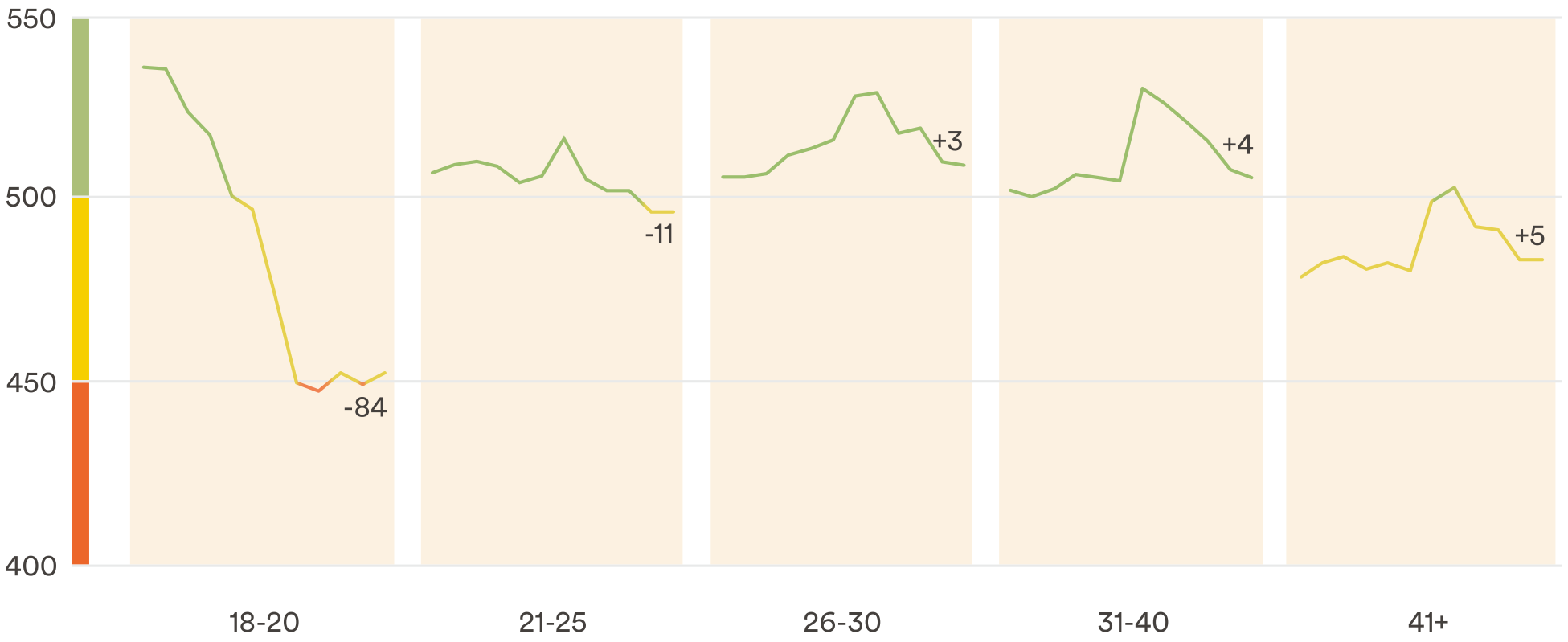
One of the most significant trends in this data set is the decline in English proficiency in the 18-20 cohort which, after a decades-long decline between 2011 and 2022, has remained at a stable low level since then, coinciding with disruptions in their education during the pandemic years.

Where are English skills gaps most notable?

Young adults continue behind the curve

One of the most significant trends in this data set is the decline in English proficiency in the 18-20 cohort which, after a decades-long decline between 2011 and 2022, has remained at a stable low level since then, coinciding with disruptions in their education during the pandemic years.

For organizations looking to welcome new talent, the loss of proficiency in young adults merits attention, especially since it could further disadvantage a generation already facing significant challenges in securing entry-level jobs.

The good news is, at a national level, most countries have seen proficiency rise in at least one cohort of working age participants over the past decade, indicating that organizations are a driving force in developing English skills, either through formal training or access to practice.

Global age trends (2015 – 2026)

Proficiency by country, industry, and role

Trends in English proficiency are not equal across regions, industries, and roles.

Europe continues to perform strongly but has plateaued; Asia shows a comparatively narrow skills gap; Latin America has a particularly pronounced age divide; Africa remains highly diverse in its results.

Sectors that fundamentally function on a global stage, such as aviation and professional services, perform better than more locally focused industries, like manufacturing or healthcare.

Communication-heavy roles, meanwhile, favor higher English proficiency, putting operational and customer-facing personnel in the ‘High proficiency’ band, unlike support roles (for example HR or legal) who remain in lower proficiency bands.

These insights – outlined in detail in the full report – suggest that there is no single English-learning strategy that will be effective everywhere for everyone. The opportunity for L&D is to move from a generic approach to a more targeted one.

Why it matters: Creating opportunities to innovate and grow

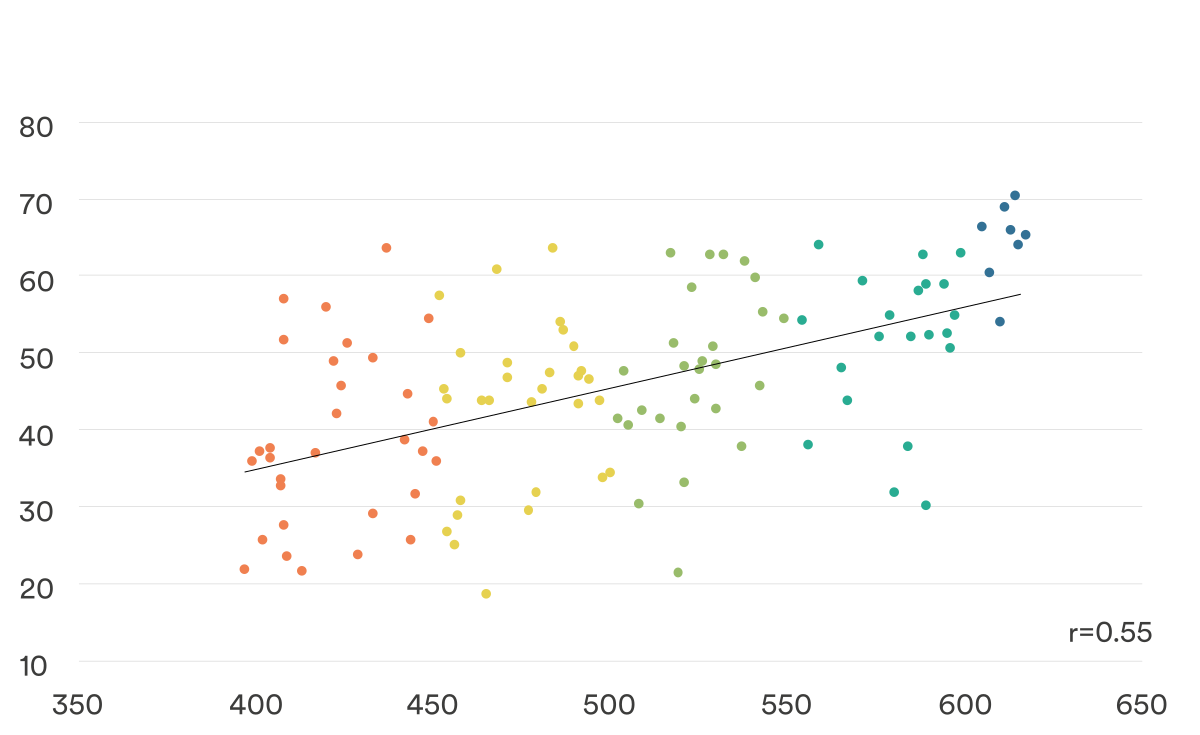
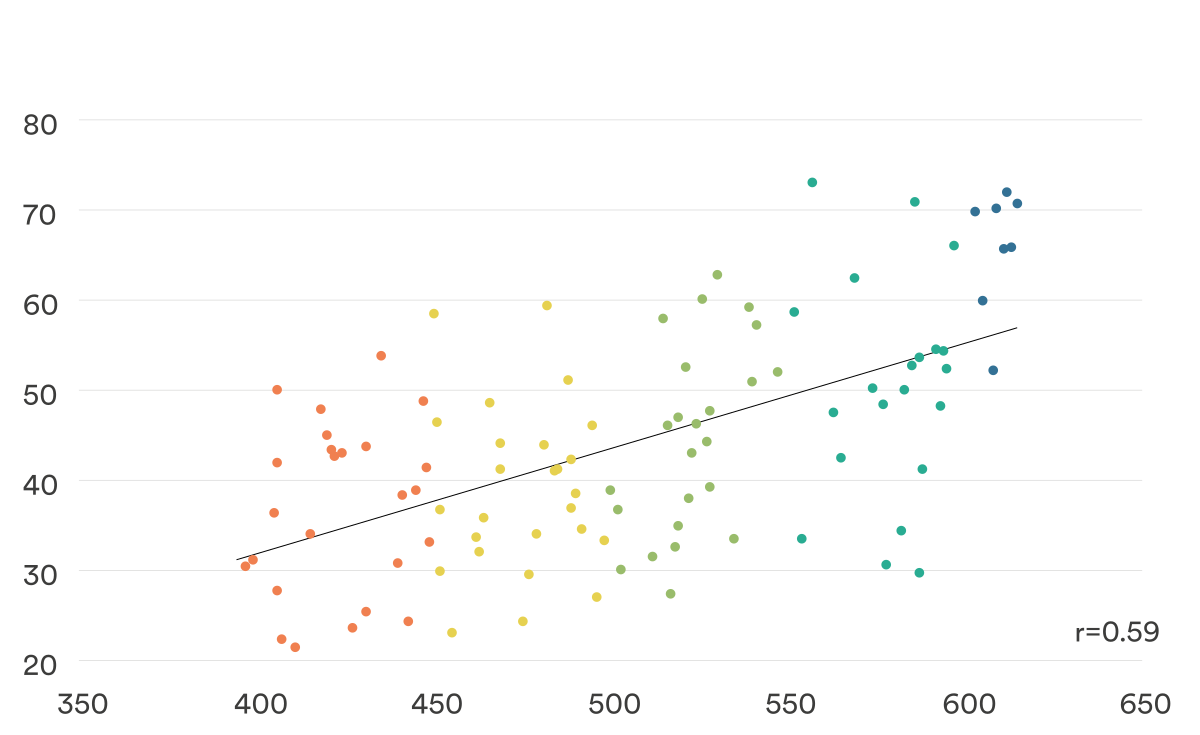
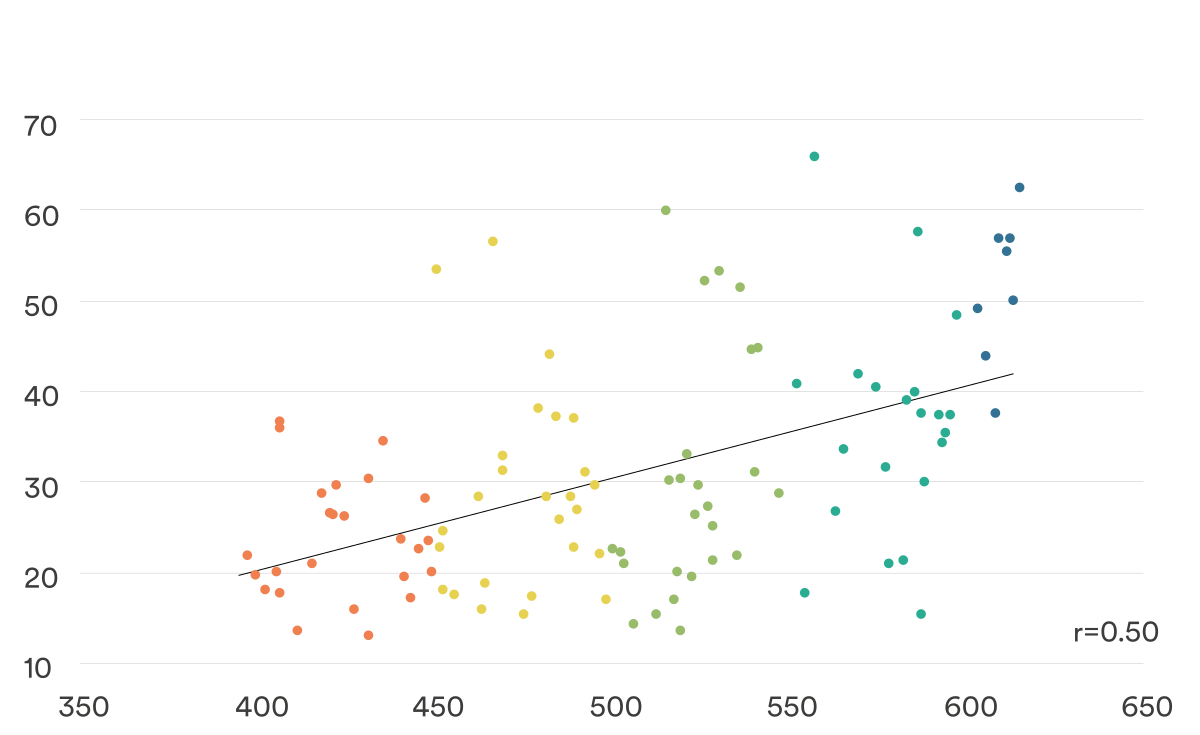
The global EPI data, when mapped against other indices of business and social success, demonstrates a clear positive correlation.

These patterns suggest that speaking a shared language at a sophisticated level is beneficial for developing new ideas (Global Innovation Index), getting work done (Productive Capacities Index), and attracting, growing, and retaining great people (Talent Competitiveness Index).

Though far from being the source of these benefits, the data appears to imply that English skills enable a highly productive level of collaboration and comprehension. These advantages could transform an organization.

English & Productivity

Productive Capacities Index

EPI score

Source: United Nations Conference on Trade and Development, 2023

English and talent competitiveness

Global Talent Competitiveness Index

EPI score

Source: Portulans Institute, 2025

English and global innovation

Global Innovation Index

EPI score

Source: World Intellectual Property Organization, 2025

Speaking a shared language at a sophisticated level is beneficial for developing new ideas, getting work done, and attracting, growing, and retaining great people

Action points for HR leaders

The 2026 EF EPI provides a useful shift in perspective for leaders.

Where organizations may have historically offered a ‘one-size-fits-all’ solution to improve English skills, understanding the local or demographic challenges can enable training managers to identify and target training where – and how – it is most needed.

#1


Measure accurately the skills people actually need, taking into account all four language skills. Identify where receptive ability (reading, listening) is masking productive weakness (speaking, writing).

#2


Treat English speaking proficiency not simply as a language-learning outcome, but as a form of access, especially for young, entry-level workers. Prioritize the moments where language affects performance, progression, and inclusion.

#3


Consider training that targets speaking practice as a strategic initiative. Getting your teams to practice English out loud is easier than ever with AI conversations and classes embedded in many programs – prioritize holding space for AI practice as well as face-to-face interactions between colleagues.

#4


Ensure that all functions – not just communication-heavy ones – are considered for language training. Opportunities in the workplace may arise on the fringes of an employee’s assigned function.

#5


As employees normalize using AI for communication, pay attention to where these new tools are enabling efficiencies and where they could be concealing or widening gaps in real English capability. You should also explore how LLMs can help your teams overcome English learning challenges. But remember that if AI can assist with language skill development, it can also become a crutch.


About EPI

This edition of the EF EPI is based on test data from more than 2,300,000 test takers around the world who took the EF SET in 2025. The EF SET is an online, adaptive English test of reading, listening, speaking and writing skills. It is an objectively scored test designed to classify test takers’ language abilities into one of the six levels established by the Common European Framework of Reference (CEFR). The EF SET is available to any Internet user for free. For more information about the research and development of the EF SET, visit www.efset.org/about.